

This post may contain affiliate links. If you purchase something through them, I may earn a small commission—at no extra cost to you. I only recommend what I personally use and love.
No Smartphone, No Plan, Just Trust and a Ticket
I didn’t have a smartphone back then. I was already deep into my Penang visa run travel story before I even had the words for it. No camera in my pocket, no cloud to remember things for me. Just a slip of paper, a ticket bought from a weathered travel desk on Koh Tao, wedged between a dive shop and a fruit stall. The kind where you’re handed a handwritten receipt, then gently shuffled from one minivan to another, trusting that someone, somewhere down the line, knew you were coming.
And oddly enough, they always did.
There were no Google Maps to reassure me. TripAdvisor was still finding its voice, mostly scattered reviews and a playful Facebook app called Cities I’ve Visited. I had it, of course. Back in 2004, I was already pinning little red dots across Southeast Asia and Europe, long before travel became a performance. It wasn’t about content. It was about momentum.
We didn’t plan with feeds or walkthroughs. We had dog-eared pages and margin notes. Stefan Loose was gospel. (for Germans) Lonely Planet was a backup. That was our internet printed, worn, and trusted. I still remember the orange covers and how they felt like lifelines in my backpack.
These days, people call it the digital nomad life. But back then, we were just trying to stay, legally, simply, without losing the thread of where we belonged. No hashtags. Just movement.
Visa Runs and Life Between Two Worlds
It must’ve been 2004. Or 2005. By then, I’d already made this journey a handful of times, visa runs, one blurring into the next. But this one turned into a Penang visa run travel story I’d carry with me for years. And, yes, Penang will always stay with me.
At that point, I was splitting my life between the salt-stung days of island living on Koh Tao a diver’s paradise in Thailand, and the clockwork rhythm of shift work back in Germany. A strange mosaic of ferry terminals, airport halls, and palm-lined hammock paths.
These visa-run trips weren’t about leisure. They were about necessity. About stamping time into a passport to keep things going.
And here’s the paradox: I wasn’t quite seen as a farang. Not in the way that term was usually thrown around on the islands. I came from Germany, yes, but I was born in Davao City, in the southern Philippines. My face didn’t match the backpacks around me. In those cramped, sweaty minivans, wedged between sunburned visa-runners from Europe and North America, I looked like I belonged to the region. And yet I didn’t. Not quite.
So, there I was, somewhere between identities, between islands and continents, between perception and reality. And somehow, all those blurred borders led me to Penang, a place that offered far more than a passport stamp.
Follow the Smoke: Tandoori Chicken, Naan, and a Taste of Something More
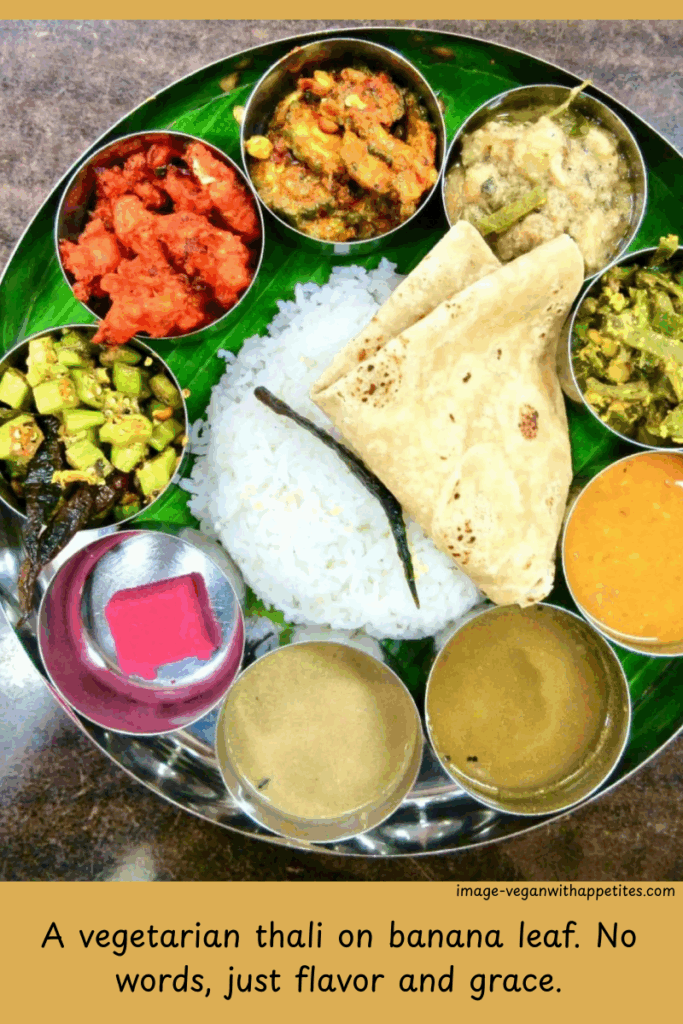
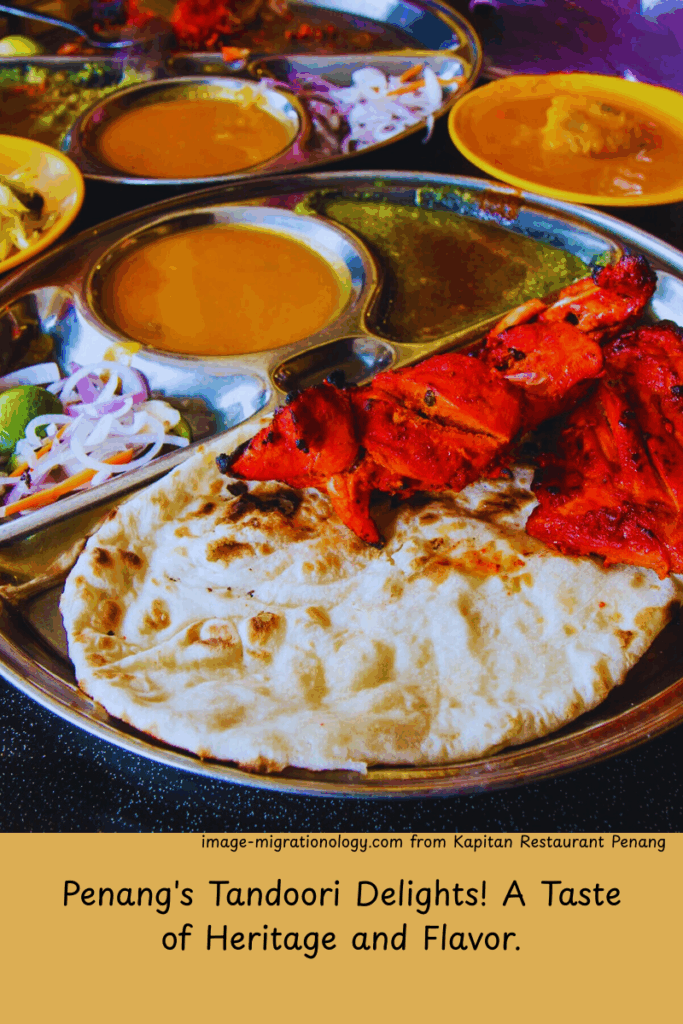
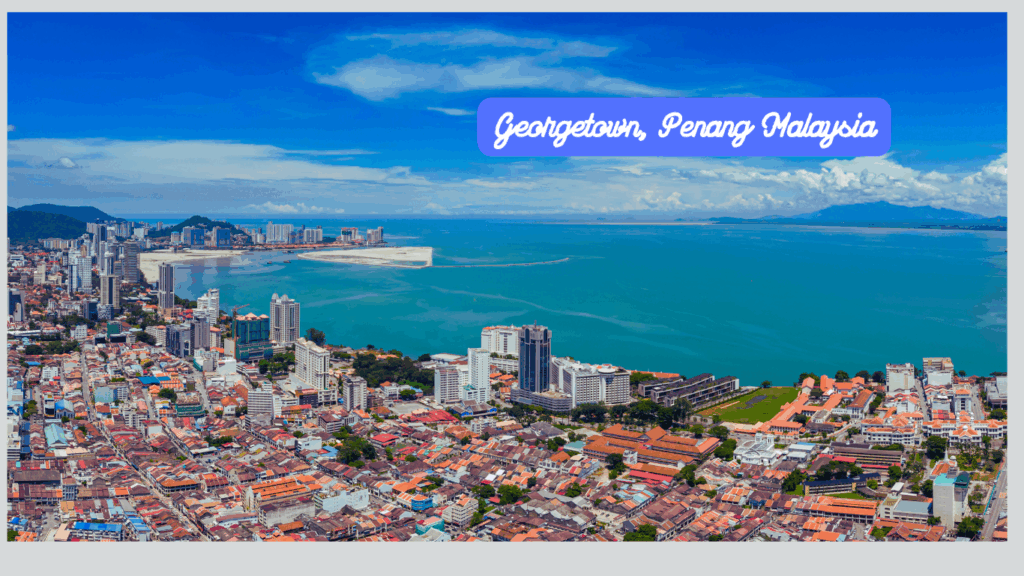
We always stayed somewhere in Georgetown. A no-frills hotel, nothing fancy, just a place a few meters from everything that made Penang feel like more than a stopover. Close enough that you could smell the tandoori long before you saw the fire. Back then, there were no curated food courts or stylish night markets. Just a basic row of street stalls where you sat on plastic chairs and ate like you meant it.
Once checked in, we’d head straight toward the Indian quarter, drawn by the scent of spice and smoke curling through the air. The tandoori grills lit up the streets like open fires, the air thick with cumin, heat, and hunger. That first bite still lingers in memory, charred, bold, wrapped in soft naan and dipped into something too good to name. These days, I try to recreate that magic at home with a simple tandoori masala blend, not quite the same, but just enough to bring it back.
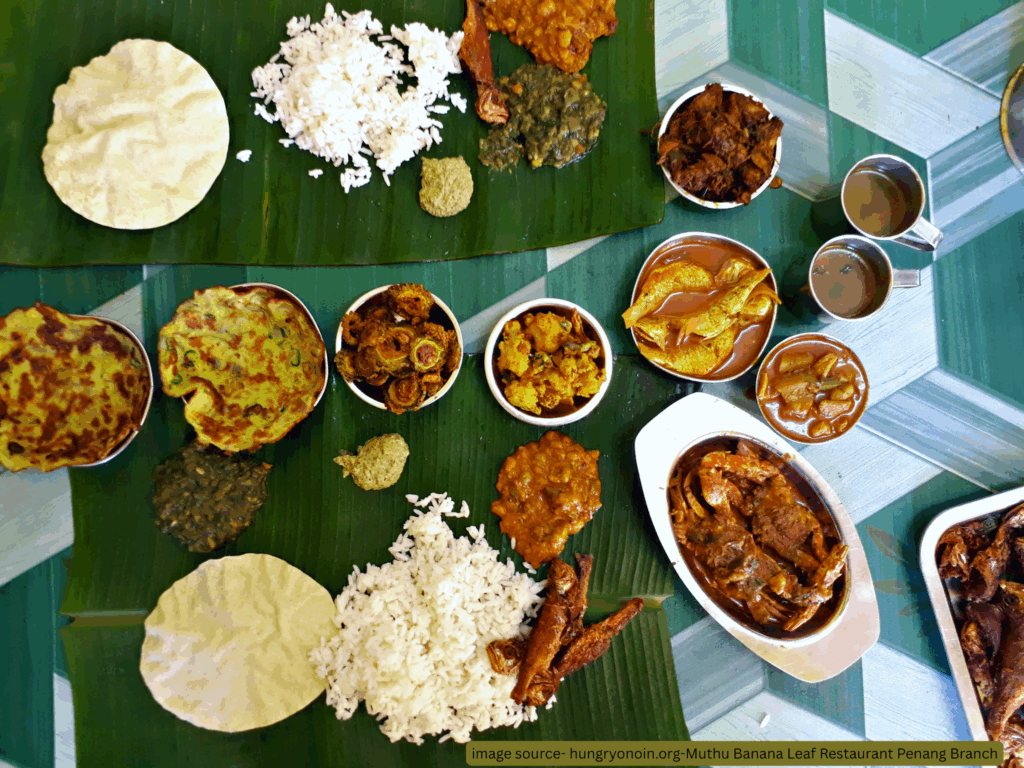
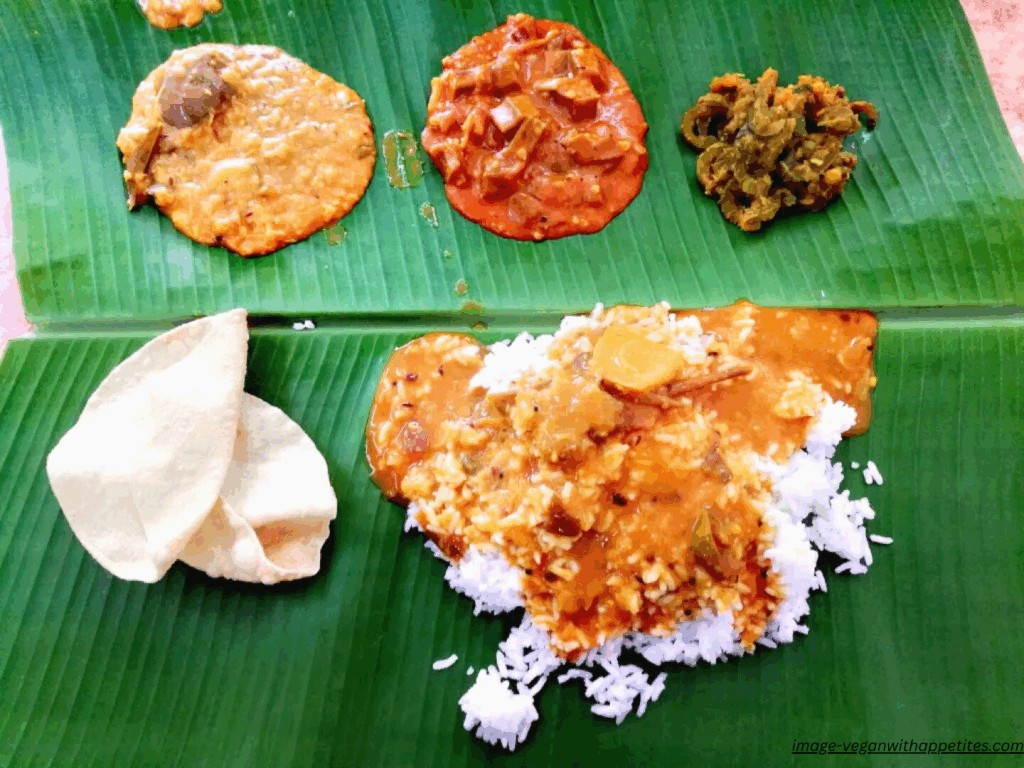
One afternoon, we stepped off the busy street into a quiet vegetarian place. No name to speak of. No chatter. You simply sat. A banana leaf was placed in front of you like an invitation. Then came a silent rhythm: a man with pots, serving ladles of lentils, pickles, vegetables. No menu. No performance. Only gestures, and something that felt close to reverence. Moments like these remind me of the quiet power of simple tools, like carrying a little journal to note things you can’t quite explain in words.
Penang has changed, of course. But that smoky corner near our hotel, those chairs in the street, the way people cooked without spectacles, those details never left.
We Took a Wrong Turn, and Found a Story
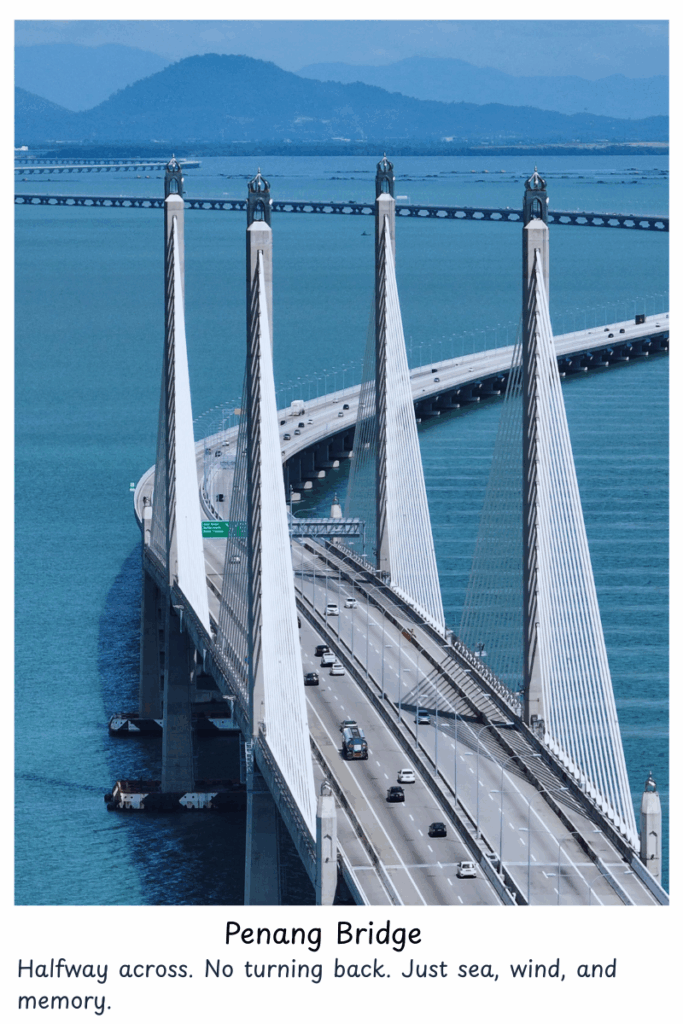
And then, there was the bridge!
We’d rented a small moped, our first time riding one in Penang. What began as a short joyride turned into something else entirely when we took a wrong turn and suddenly found ourselves on the Penang Bridge. Halfway across before we even realised where we were, wind whipping against us, cars roaring past, no place to stop, no option to turn back.
The bridge stretches from Gelugor, just south of Georgetown, all the way to Butterworth on the mainland—13.5 kilometres of open sky and steel over the sea.
A mix of panic and awe took hold. One of those moments you can’t stage or forget.
It was terrifying and exhilarating all at once, a moment where I felt small, exposed, but vividly, unmistakably alive. That kind of clarity only hits when you’re far from comfort, riding straight into the unknown with nothing to hold onto but instinct and each other.
I didn’t know it then, but that crossing, wild and wind-beaten, taught me something about what I wanted from travel. Not comfort. No plans. Just enough to carry, and the freedom to keep going.
The Day I Understood What Multicultural Really Feels Like!
Years later, long after I had returned to Europe, I started to understand what Penang had quietly offered me. Beyond the food, beyond the passport stamp this Penang visa run travel story became my first real encounter with multicultural life. Long before I ever reached Singapore, Penang opened that door.
A place where Chinese temples, Indian shrines, mosques, and old Christian churches stood side by side, not just in structure, but in the way, people moved around one another. Shared space, shared rhythms. Colonial history lingered in the names of streets and the curve of buildings, but what stayed with me most was how everything coexisted, not perfectly, but peacefully.
Back then, I didn’t have the words. Now I understand it better. It was not spoken in English or Malay, but in the rhythm of daily life. In how people gave without needing to explain. In how the city lets you be part of it, quietly, without a big ceremony.
I didn’t take a single photo back then. But I remember it all. The smell of lentils rising with the afternoon heat. The tear of naan between fingers. The rush of wind on the bridge. And the quiet hospitality of a place that never asked, only offered.
What Stays After the Journey
There’s more to tell, of course, there is. Other crossings, other meals, other countries that left their mark.
Next time, maybe we’ll head to Burma(Myanmar), as it looked before the stamps and checkpoints. Before the small boat left Ranong, the world felt quiet differently.
But for now, these were the moments I carried.
And a few things I still carry, quiet companions that stayed long after the road changed.
The Things I Still Carry
What I Carry Now: Travel Companions That Stayed
Travelling through Penang taught me how little we need, just the essentials, and maybe one thing that brings you back. Over time, I’ve let go of the gadgets and gimmicks. What’s left are the things that work, that last, and that carry memory.
Back then, we didn’t call it digital nomad life. But we packed light, often moved, and knew the value of gear that worked, especially on the kind of visa runs where everything depended on timing, trust, and one good backpack.
- Lightweight Travel Backpack
Not sleek, not too expensive, but it breathes well and holds what matters. The kind of bag that’s been tossed on ferry decks and bus station floors—and keeps going.
I don’t experiment when it comes to the one thing that carries everything. I go for what’s built to last. Deuter is German-made, tough, breathable, and has never failed me, from airport floors to scooter rides in Southeast Asia.
→ https://amzn.to/440K5sY Deuter Lake Placid Unisex – Adult Daypack
https://amzn.to/42ISqiy Deuter AViANT Access Pro 55 SL Damen Reiserucksack mit Daypack
- Packing Cubes
I resisted them for years. Now I open my bag and everything’s in place. One of those rare “why didn’t I do this sooner” travel decisions.
→ https://amzn.to/447LoGI - Universal Travel Adapter
One plug, every country. No more hunting in night markets for the right pins. It just works.
→https://amzn.to/4jnr9cR - Portable Charger (10,000mAh)
A lifesaver when your phone’s on 4% and you’re halfway across a bridge with no turning back.
→ https://amzn.to/4cJBWLV
- A Good Sarong
The most underrated item in every Southeast Asian traveler’s kit. Works as a towel, blanket, temple wrap, and—yes—as a better neck pillow than anything I’ve bought online.
This one’s from PANASIAM—made with natural cotton, fair conditions, and a quiet mission rooted in Southeast Asia.
→ https://amzn.to/42DHFOv
- Tiger Balm Ointment
You’ll find local balms all over Thailand, too, but this is the one that followed me back to Europe.
A tiny jar that does everything. Headache? Motion sickness? A weird mosquito bite at a bus stop? This balm has saved me more times than I can count.
→ https://amzn.to/4jFlEWp
- Tandoori Masala Blend
It’s not Penang’s smoky back alley grill, but it brings the memory close enough. Just open the jar and see what I mean.
→ https://amzn.to/42yiJb6